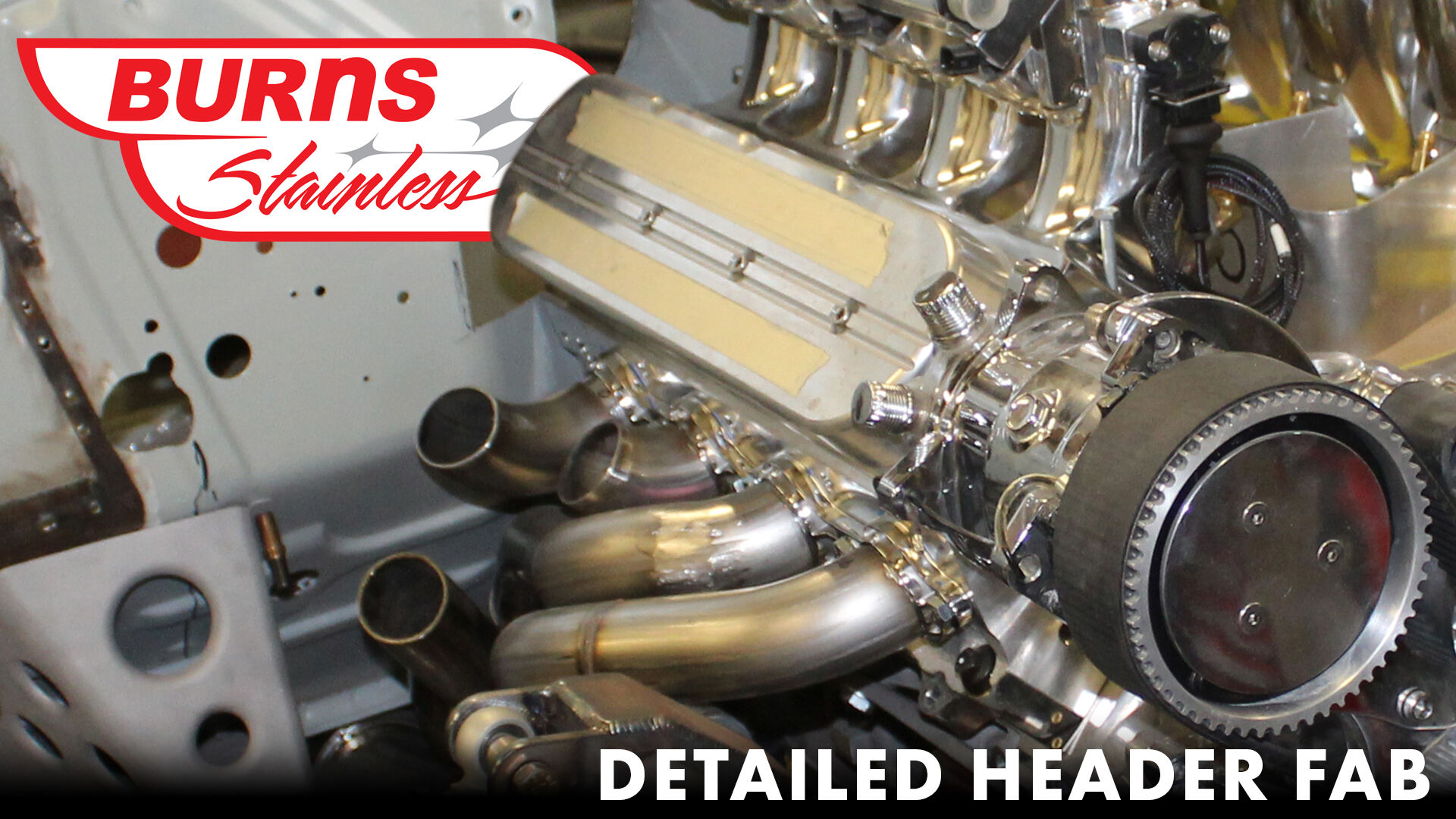
Building stainless steel racing headers is not a “cut it, tack it, hope it clears” project. That kind of thinking belongs on bargain-bin parts, not on a serious race engine. A properly designed header controls exhaust velocity, supports scavenging, fits the chassis, survives heat, and makes power where the engine needs it.
That starts before the first piece of tubing hits the saw. At Burns Stainless, we have spent decades helping engine builders, race teams, and fabricators build exhaust systems that are engineered, not guessed into place. Whether you are building custom racing headers for a road race car, drag car, off-road truck, motorcycle, marine application, or high-performance street machine, the same rule applies: Plan the header before you sacrifice the tubing.
|
Start With the Header Design
|
The first decision is the design. If there is an existing, proven header design for your engine, chassis, and performance goal, use it as a foundation. There is no prize for reinventing a working solution unless the engine, packaging, rpm range, or power target demands it.
When a proven design exists, the process is more direct. You can move into building the actual stainless-steel header with confidence because the major design questions have already been answered. But don’t fall into the trap of monkey see, monkey do. Just because a competitor went fast with a particular exhaust design with his combination, it doesn’t mean
you will with your combination.
But if you are starting from scratch, stop pretending the first tube layout in your head is engineering. It is not. Fresh header design requires real data, real experience, and a clear understanding of the engine combination.
That is where Burns Stainless earns its keep.
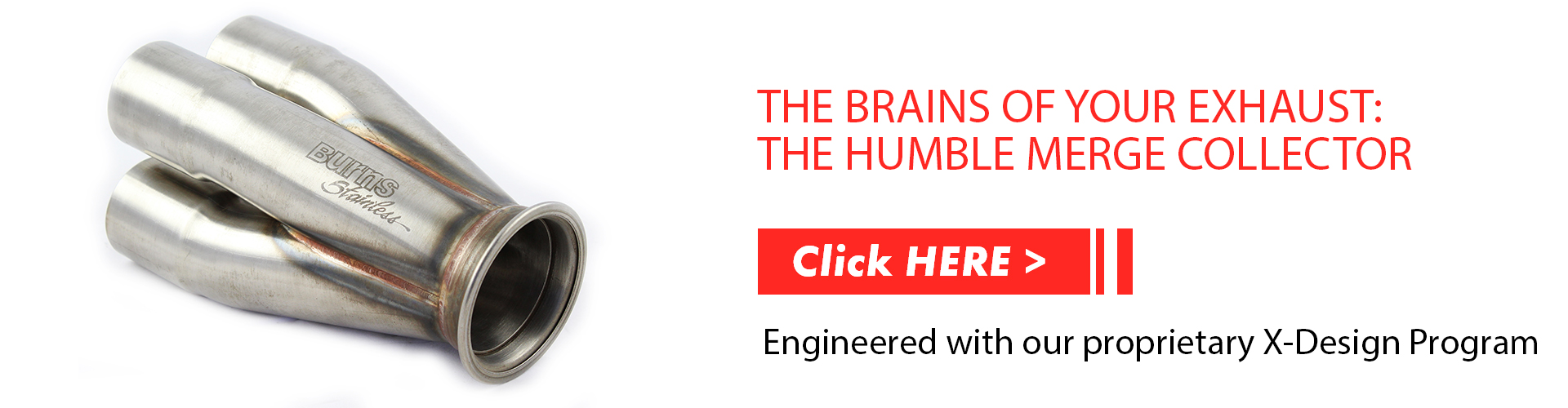
Our X-design parametric computer header design program helps determine a logical starting point for primary tube diameter, step sizing, collector configuration, and overall header layout. To use it, complete the Burns Stainless Race Engine Specification Form and send it in, or use the online form.
Engine builders with years of dyno experience may already know what they want. Good. That experience matters. But even experienced builders benefit from exhaust design direction because header tuning is a complex field. Primary length, tube diameter, collector design, camshaft profile, displacement, rpm range, compression, and intended use all work together. Ignore one, and the engine will tell on you.
|
Mock It Up Before You Waste Stainless
|
In most custom header builds, the smart move is to create a mock-up header in mild steel before committing to stainless steel. Mild steel is easier to cut, fit, and adjust. It is also far less expensive than stainless. There are also great kits such as the ICE Engine Works kit that has plastic blocks that can be used to mockup headers.
Use the same radius mandrel bends in mild steel that you plan to use in the final stainless header. Do not mockup with random bends and expect the final product to magically match. A bend radius may change during the mock-up stage, and that change will directly affect the stainless bends required for the finished header.
This is where careful builders separate themselves from parts hangers.
A proper mock-up lets you solve routing, clearance, primary length, collector location, flange alignment, spark plug access, bolt access, chassis interference, and serviceability before the expensive material gets touched.
|
|
|
|
FOR BUILDERS WHO DEMAND PRECISION, POWER AND PERFORMANCE
|
|
|
|
© Burns Stainless
1041 W. 18th Street, Suite B104,, Costa Mesa, United States, 92627
This email was sent to [[contact.email]] because you are a professional contact in our industry. If you prefer not to receive future updates, you can unsubscribe at any time."
Edit preferences | Unsubscribe
|
|
|
|
|
|
|
|